The River

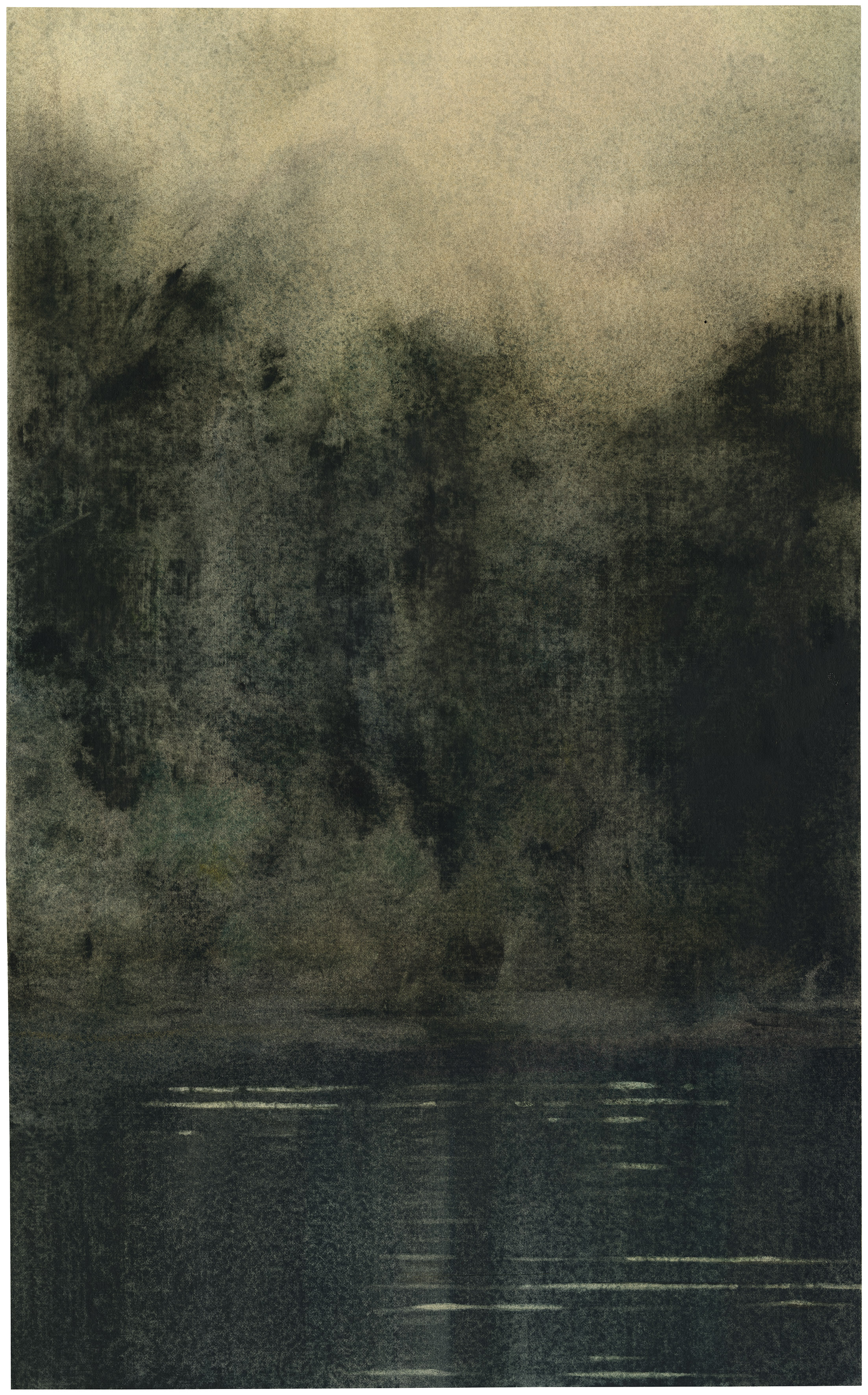
Ord River Abstract

There is a very purposeful sense of passage passing through the images of Grealy’s most recent watercolours. They depict river edges rather than just the rivers themselves and the flows are both horizontal, as an indication of the current relentlessly moving on, and vertical, as a sense of the hanging silence of the moment captured – motion and stillness meeting at the ruffled surface of the water. And capture seems to be what the works are all about, not just the elusive moment of the instance pictured but also of the sense of tenuousness inhabiting the status of the world depicted.” Michael Barnett

Watercolour on 640gsm on Arches paper, 52 x 32cm

Ord River Barrier

These rivers’ edges are heavily vegetated, indicative of the readily registered persistence of the natural order still prevalent in both locales, the Brisbane Valley here and the Ord River in Western Australia. The dense leafy palisades relate to the state of things before the intercession of a new order being created, here in Brisbane already noticeably progressed but in the Ord still at a point of commencement, with the surveyor’s tape and the floating barrier being harbingers of a process yet to become more fully implemented. And this competition between existing nature and new interventions is a consistent theme charting each river’s passage through increasing graduations of the tussle between the two.” Michael Barnett

Watercolour on 640gsm on Arches paper, 52 x 32cm
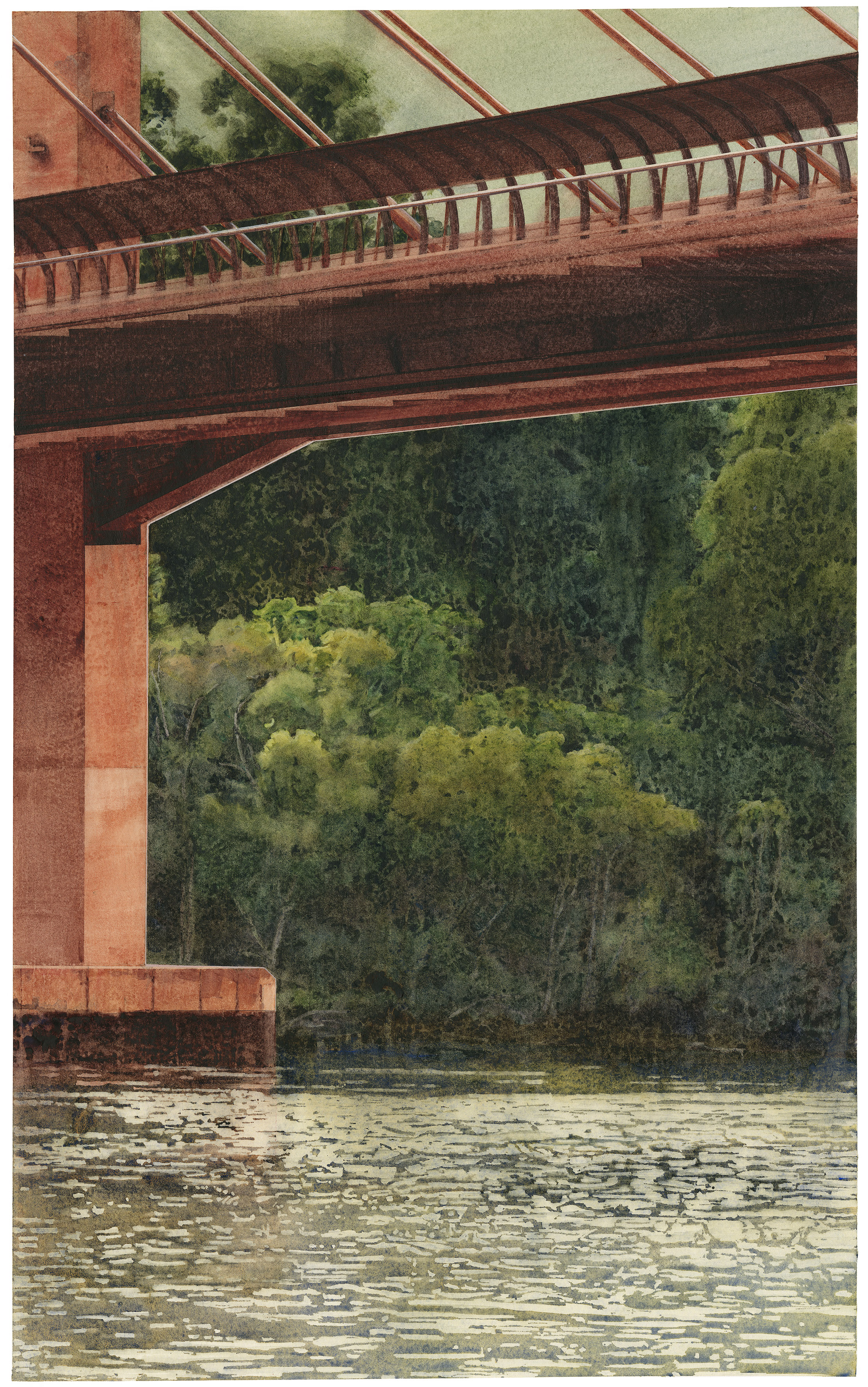
Brisbane River Green Bridge

The accompanying drawings also juxtapose what was there before or still is now with what has replaced it, as in the image-filling construct shown in wire frame in ‘No Title’, or as a sense of what potentially might come next in the more intimate views of ‘Maria’s Garden’. The riverbank at Kurilpa Point has already been assailed many times over before the current incumbent, the Gallery of Modern Art, supplanted its past, whereas the surreptitious consumption of carefully nurtured backyards throughout the suburbs is ongoing and could happen next door to you at anytime….” Michael Barnett

Watercolour on 640gsm on Arches paper, 52 x 32cm
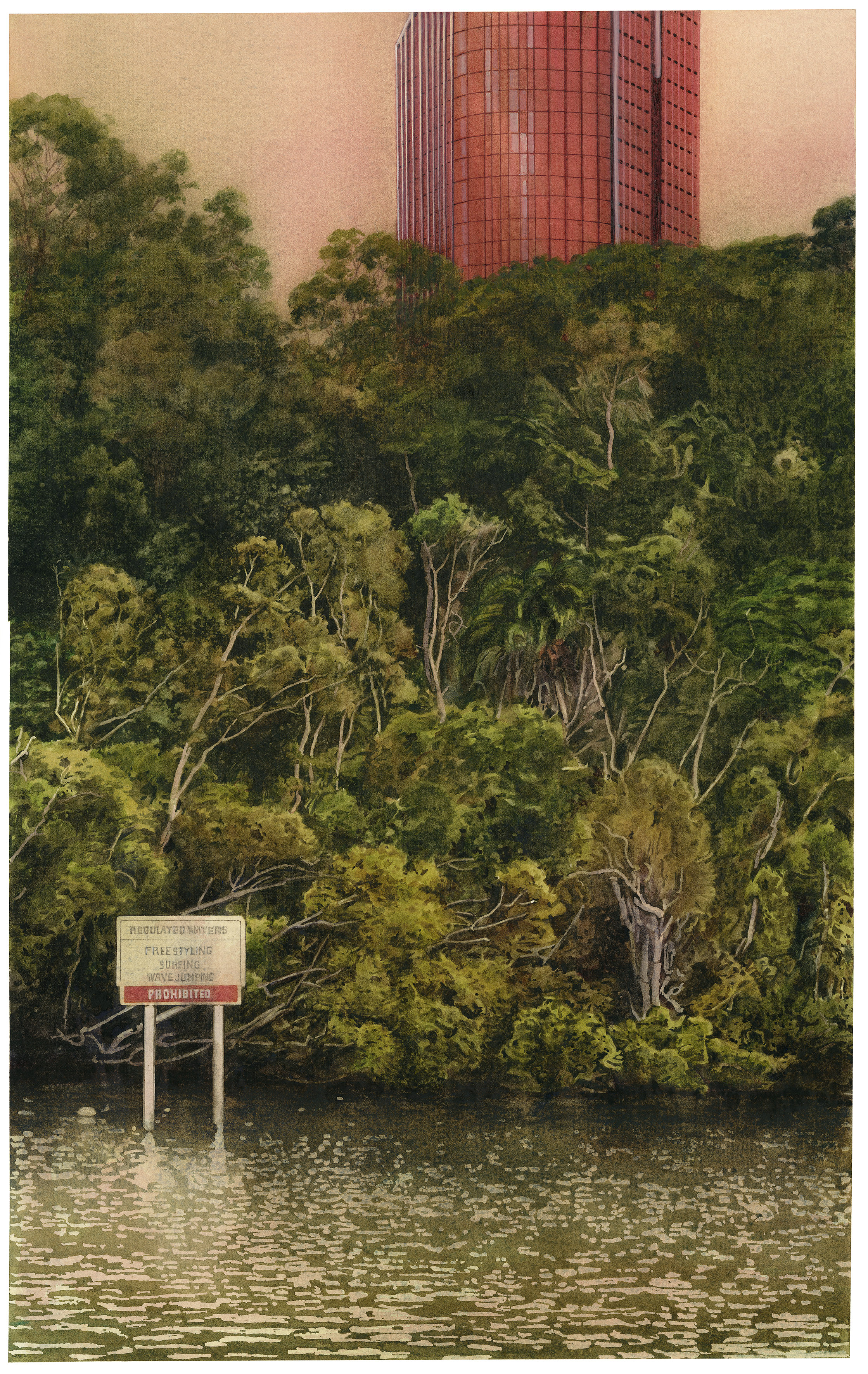
Brisbane River City Gardens

Progress also has a relentlessness, it would seem, as it follows its own course, and the organic tangles of the water’s verdant border are progressively consumed by the increasing concreteness of urban form or industrial exploitation.” Michael Barnett

Watercolour on 640gsm on Arches paper, 52 x 32cm

Brisbane River New Farm

And, in this, every picture tells its story, but it is not just the story told in the pictorial narrative. It is the way it is told as well in terms of the artist’s sense of how it should be seen and the thoughts it could provoke. This is the story embellished by the making of the work – the careful consideration and selection of subject topic, the preparation of the surface, the balance and alignments of a composition, the processes of applying and manipulating the media and having an intention about the sensibilities conveyed in the images that result.” Michael Barnett

Watercolour on 640gsm on Arches paper, 52 x 32cm

Brisbane River Lourdes Hill, Bulimba

In the darkness of the restrained palette and careful tonal evocation of dawn or dusk effects there lingers a sense of nostalgia and, at the same time, a kind of expectation – a reflection of things past and an inkling of the portent of what might promise. There is depth hovering in the shadows and, as much, in the hollows of the water, while the brash redness and angularity of incrementally effected change stand in stark relief and presence as those blasé incursionary elements that become so difficult to ignore once introduced.” Michael Barnett

Watercolour on 640gsm on Arches paper, 52 x 32cm

Brisbane River Portside

And while all the technical dexterity and patient attention to process builds the images that can be read and the story told, it is the effects achieved in the texture of the surface, the balance between vivid pictorialism and the abstract nature of the medium as marks, the terrain and patterns of application and then the atmosphere evoked in the tonal judgements and density of detail hovering between literal depiction and gestural allusion that gives these works another life as well- as Art.” Michael Barnett

Watercolour on 640gsm on Arches paper, 52 x 32cm

“THE RIVER” LETHBRIDGE GALLERY 19 April – 7 May 2024
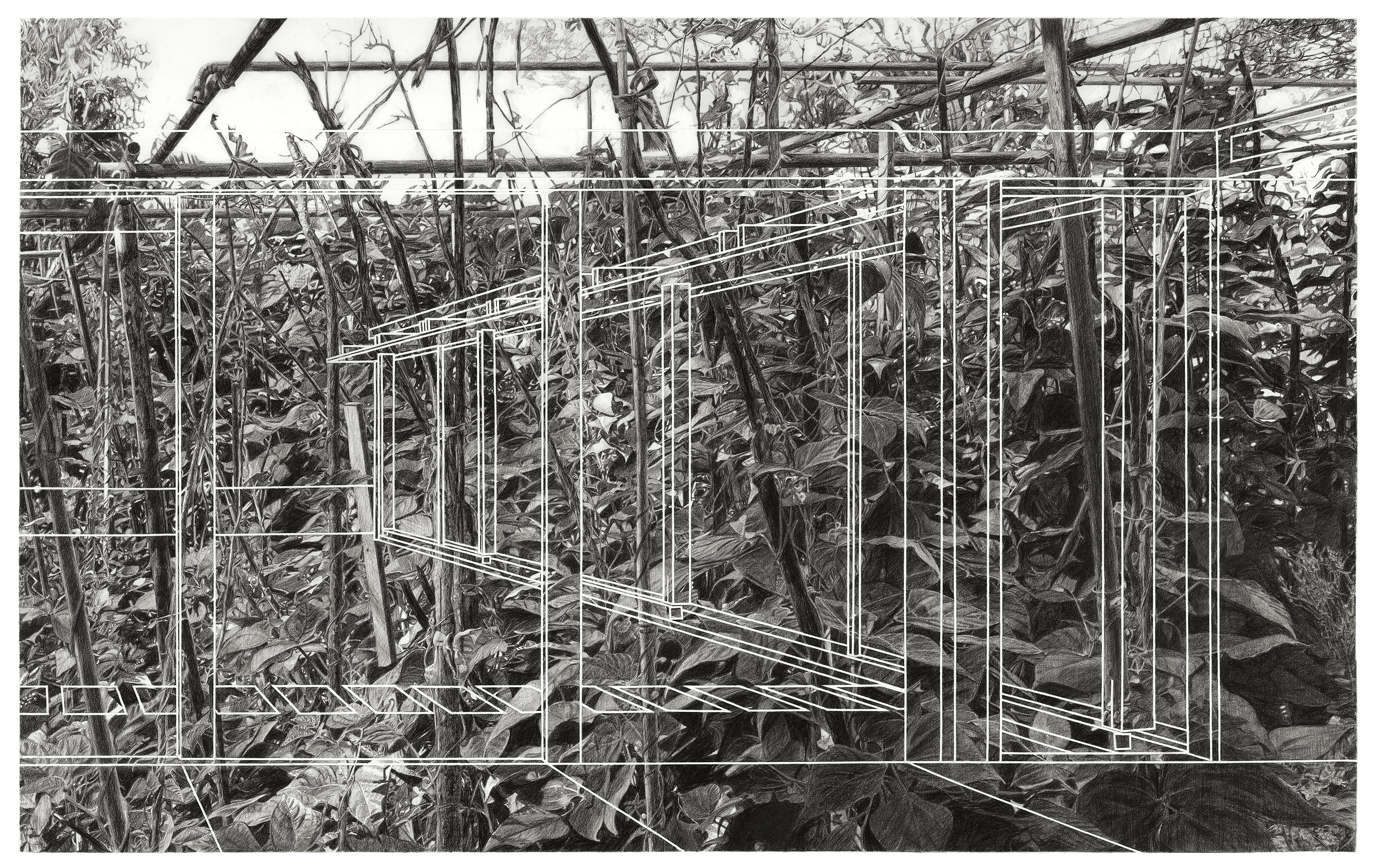
Maria’s garden, scheme c

Winner Dobell Drawing Prize 23

Catherine O’Donnell said about the judges’ decision: “Jane’s work is beautifully executed, very skilful but also expanding drawing to a different level with her layering of architectural elements. It was a unanimous choice. We did look at lots of different works, the standard was very high so it was a tough decision, but we came back to this one. It’s about so many things, the balance between nature and the built environment, about time passing, the past, present and future. The work looks outstanding in the gallery, it’s very well deserved.”

The piece depicts Grealy’s neighbour Maria’s garden, whose philosophy is “waste not, want not”. Immigrating from war-torn Italy, Maria has worked and thrifted to cultivate her garden and supply her family with food and ensure nothing is wasted. This notion is reflected in the detail of the drawing, which is overlaid with a “wire frame” digital perspective line drawing to indicate present and future ways of living. With her suburb under pressure from new developments, homes and gardens are being rapidly demolished, Maria’s garden will one day be lost.

Charcoal, pastel on Arches paper 67 x 108cm

No Title

Finalist Clayton Utz Art Prize 2022

No Title 2400

Observation and imagination. The white lines are a wireframe perspective of GOMA (Gallery of Modern Art) which sits on the Brisbane River at Kurilpa Point (Queensland, Australia). Using early photographs of European settlement, explorers’, convicts’  and botanist’s’ accounts along with indigenous histories, I was able to site this existing building within a landscape which I imagine would be very similar to that the indigenous population experienced pre settlement. The name of this work, “No Title”, refers to the contested nature of land ownership here in Australia as result of invasion and colonization. The Native Title Act 1993 is a law passed by the Australian Parliament that recognises the rights and interests of Aboriginal and Torres Strait Islander people in land and waters according to their traditional laws and customs.

Charcoal, pastel on Arches paper, 89 x 144 cm

Maria’s Garden Scheme b

Finalist Lyn Mcrea Drawing Award 2021

Maria's Garden, Scheme B 2400

My earlier career as an architectural illustrator was based on observation of both existing and imagined buildings, landscapes and spaces.

Five years ago I started sketching my neighbour Maria’s garden.

The detail is important.  Maria’s philosophy “waste not, want not” is in those details.  Maria has worked hard since she arrived here, a teenager from war torn Italy. Through hard work and thrift, her garden supplied her family with food.  Nothing is wasted. The climbing frames, sheds and tools have been recycled from elsewhere. Plants come from cuttings and seeds she has saved. Water is collected from the roof, directed into rubbish bins and ladled out with a saucepan tied to a broomstick.

Our suburb is under pressure from new developments. Houses and gardens in our street are demolished in a few hours to make way for new buildings – the sort I used to illustrate. I know that one day Maria’s garden will be lost.  With this drawing, I have overlaid a ‘wire frame’ digital perspective line drawing showing how a future building might be positioned. I wish to draw attention to a way of living, and a life, that one day we will only have memories of.

Charcoal, pastel 67 x 108 cm

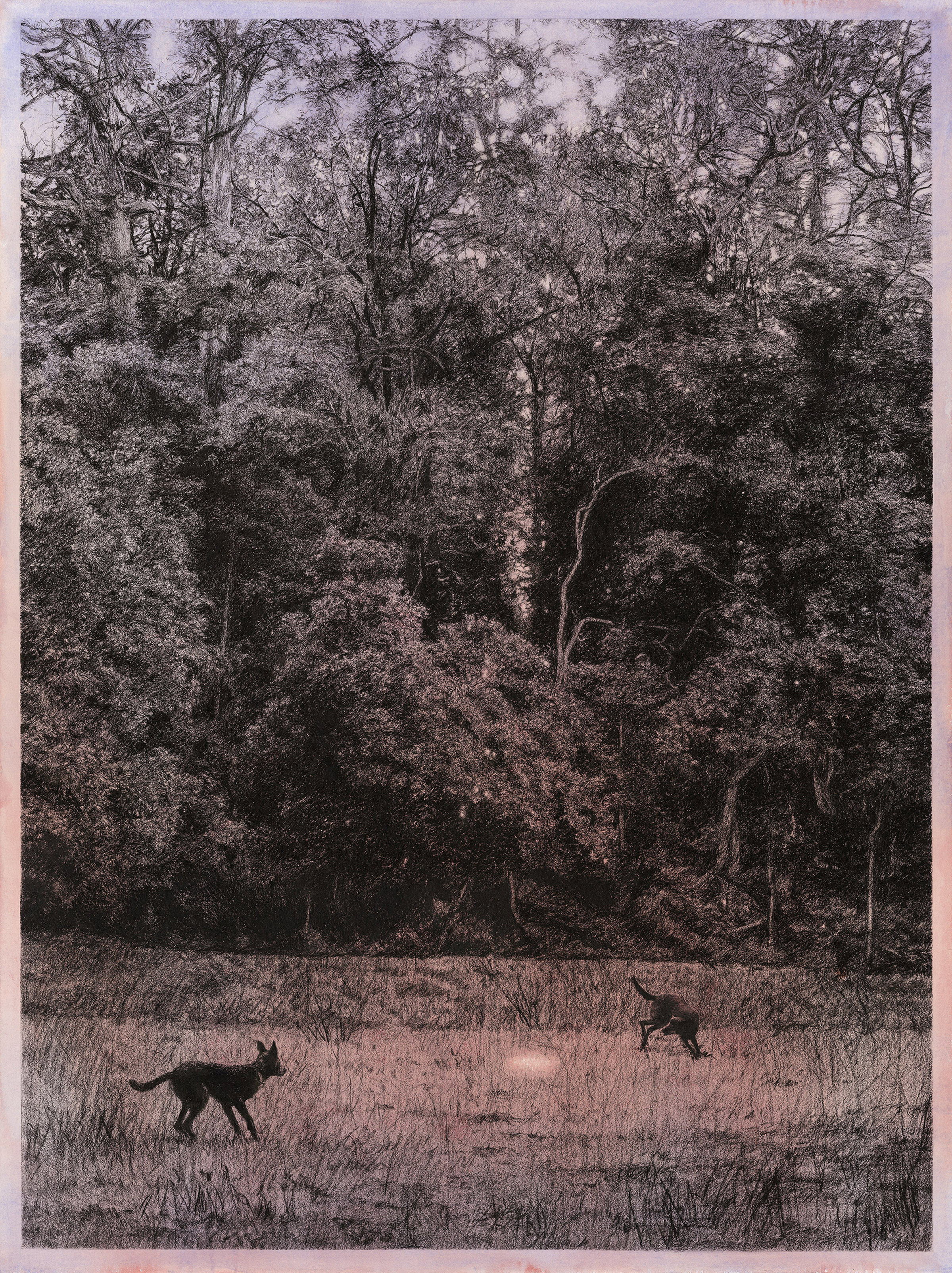
Black Dog 2020

Finalist Dobell Drawing Prize #22

Grealy Jane_Black Dog 2_DDP22 copy

For many years I have drawn my local dog park. I am fascinated by its existence, hidden behind a dense screen of trees within the highly regulated fabric of an inner city suburb. I study the dogs and the landscape carefully, then draw them, observing the changes and movements. I feel I know my subject intimately – but never totally. As I draw, the charcoal makes a soft sound on the taut, stretched paper, shapes and textures form, almost without conscious effort.

Bushfires now threaten where they never have before. Far from the fires, cities are blanketed by a smoky haze. The knowledge that, at its source, life and death dramas are playing our, casts a pall over landscape and people. Covid 19 follows and uncertainty reigns. New patterns form and protocols form. The two dogs approach each other – ready to fight or play? Or is it just one dog and its reflection?

Watercolour, charcoal, pastel on Arches paper, 120 x 90 cm

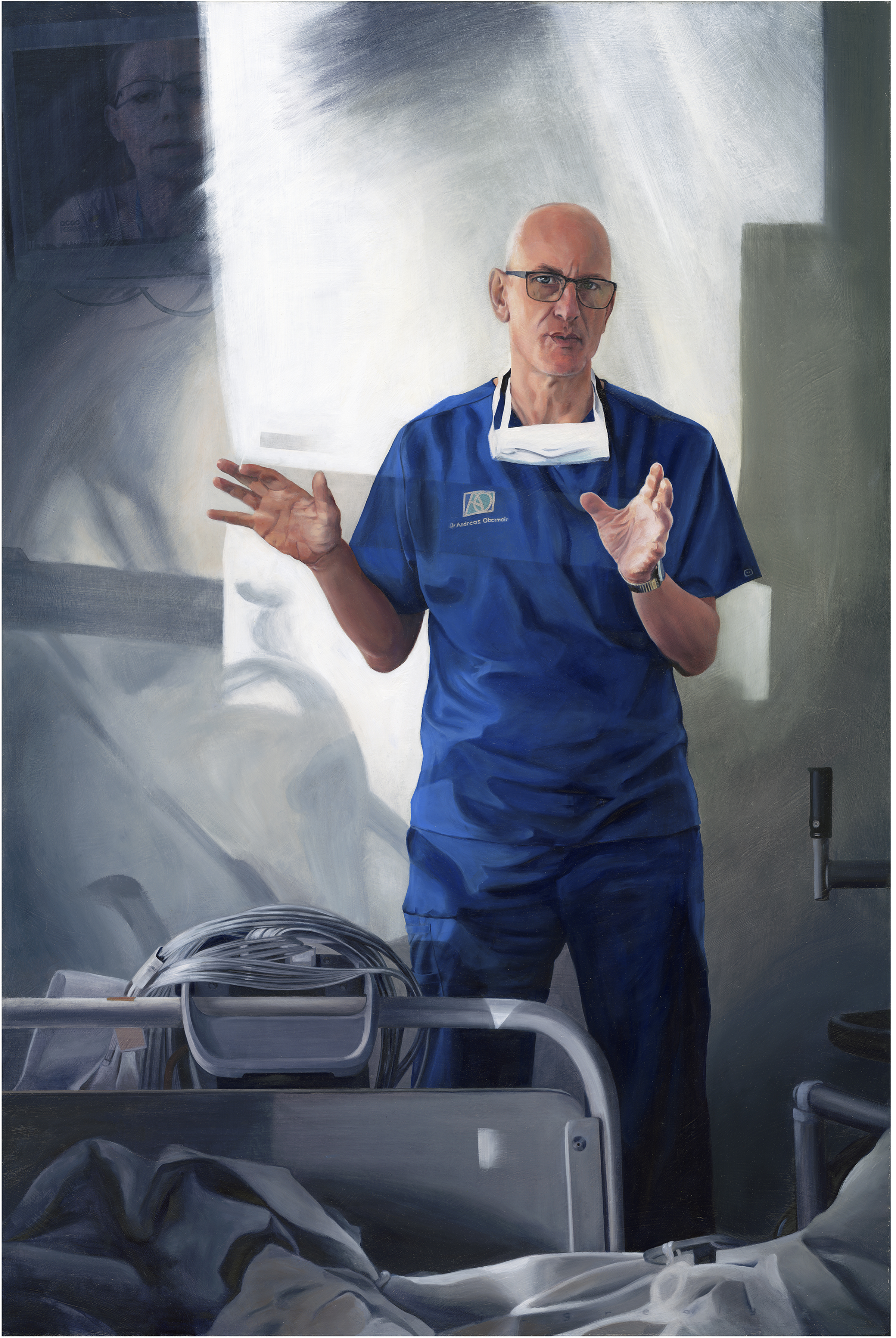
Cancer He Said

Finalist Brisbane Portrait Prize 2021

final cancer he said

“Cancer” he said as he stood at the end of my bed.  A few days later “We got it all”. This man and his team had saved my life. What drives him to be constantly searching for a better outcome for women’s cancer? From where does his inspiration come to drive his research? When asked, he said that an idea could come when least expected, sparked by a comment from a patient or a visiting researcher, a question raised by a colleague, an insight given by his wife.

Andreas Obermair is a gynaecological oncologist and Professor of Gynaecological Oncology at the University of Queensland. A dedicated researcher, he is focussed on creating gentler, kinder treatments for patients with gynaecological cancer.

Oil on linen, 152 x 101 cm

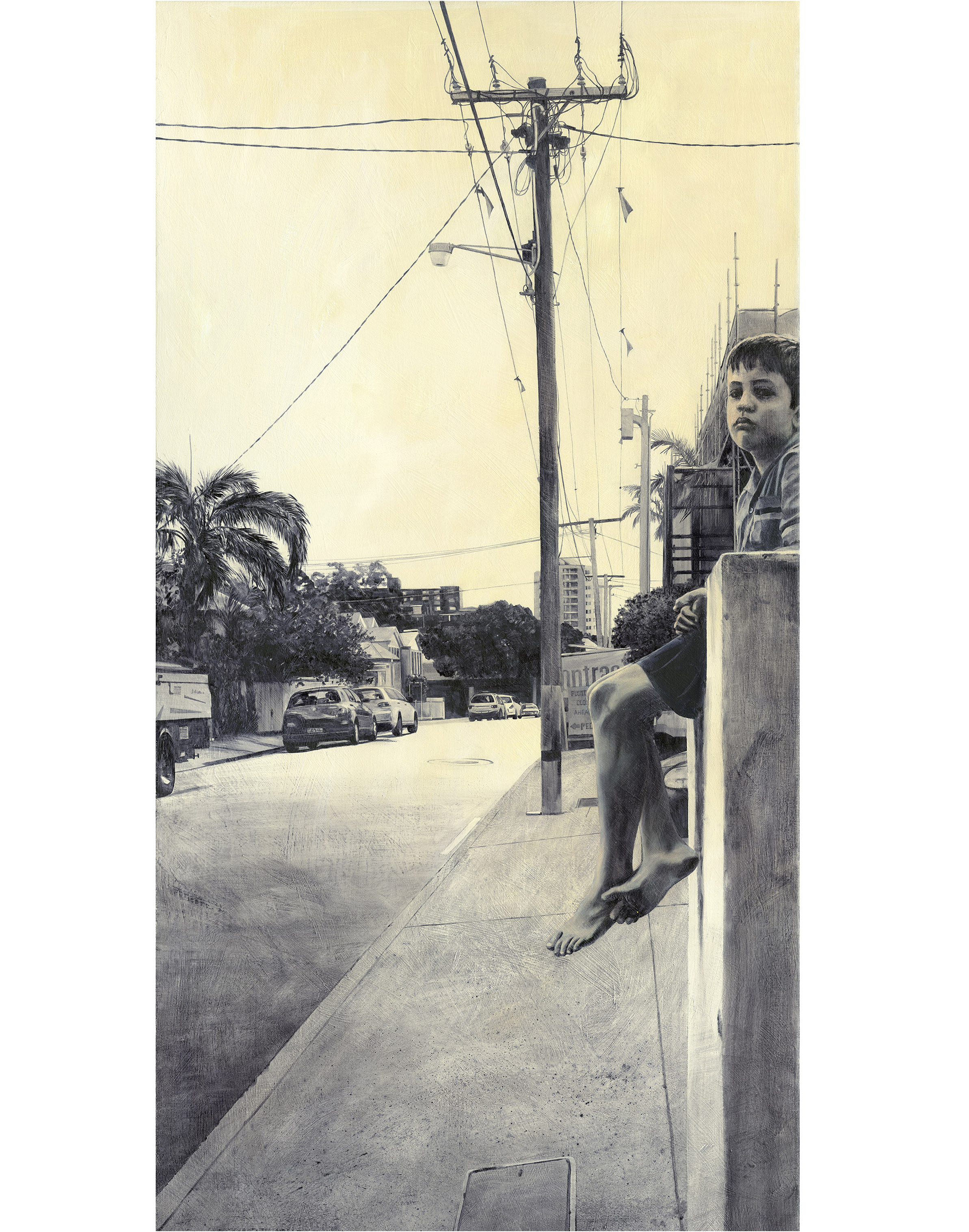
Waiting for Dad (iii)

Finalist Du Ritz Art Award 2020

Waiting for Dad 3-2

This is my grandson Thomas, after school, sitting on our front wall, waiting for his dad. I have looked after him one day a week since he was a baby. He is nearly twelve now and changing a lot, the way he thinks about the world and his place in it. Amongst all the challenges of an uncertain world, at the end of the day, he waits for his father.

Oil on linen, 137 x 83 cm.

Waiting for Dad (i)

2400 Waiting for Dad 1

Thomas is eleven years old and has grown up in Brisbane. He is fortunate to have benefitted from an excellent public school, health care, a stable government and justice system, in a country mostly free of serious conflict. Like many of his generation, he is now experiencing a relentless media environment, a dense blanket which propels concerns and challenges.

Oil on linen, 137 x 83 cm.

Axis Mundi (Harry in the Window)

Semi-finalist Doug Moran Portrait Prize 2019

2400 Axis Mundi (Harry in the Window)

I had done several portraits of Harry’s brother Thomas where Harry was in the background – so when I asked if I could take some photos, he was ready with a variety of poses, all of his own making. His decision defined the composition, a centring of his world, framing a typical Brisbane backyard.

Oil on linen, 137 x 83 cm.